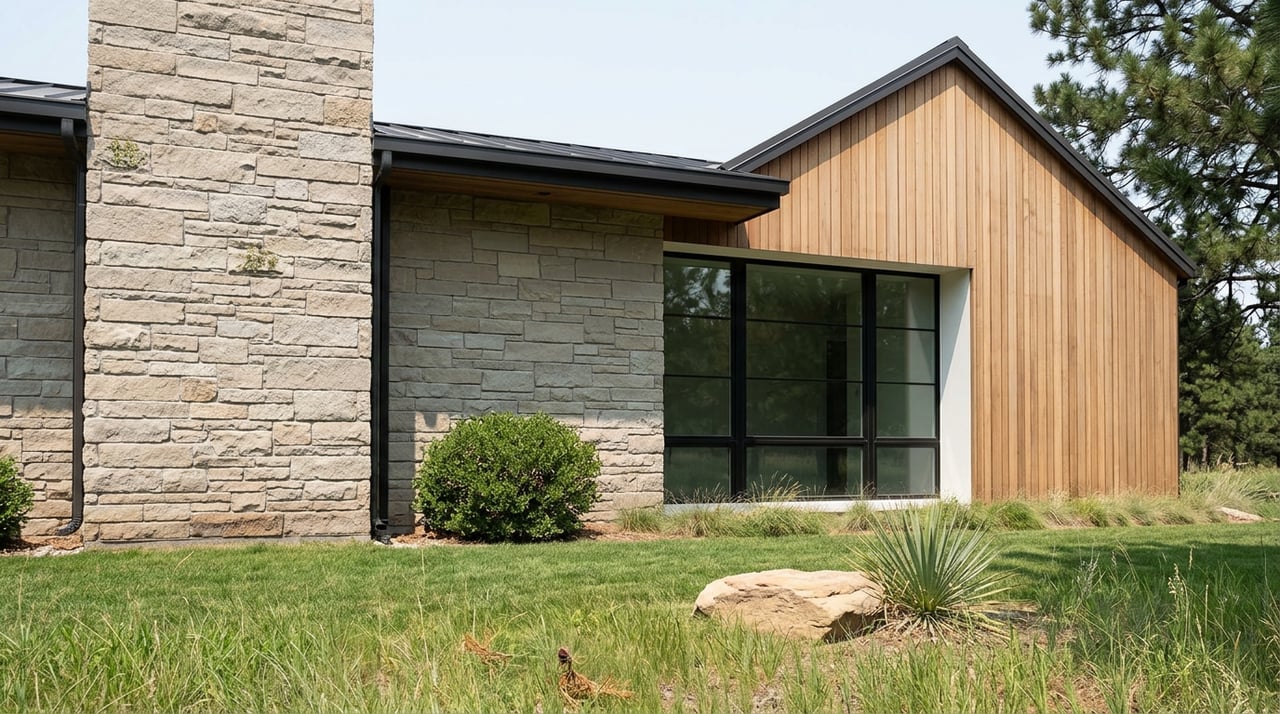
In 2025, Boulder County's own Planning Commission voted unanimously against shrinking the maximum home size allowed in unincorporated Niwot. The county commissioners cut the cap anyway, from 125% down to 100% of a neighborhood's median square footage, overriding their own advisory body's 8-0 recommendation. Since most Niwot lots are already built out, that single vote quietly limited what a lot of homeowners can do with the property they already own, and there was no local appeal available.
That override is the reason nearly 4,300 residents inside a proposed 2.9 square mile boundary will decide something bigger on November 3, 2026: whether Niwot becomes Colorado's newest home rule town. If you're shopping for a home there right now, most of what you'll read frames this as a tax story: a proposed 4-mill property tax, a 2.5% sales and use tax. That framing undersells the actual decision. Both sides largely agree the tax package is modest. What nobody can price yet is who ends up holding the pen on zoning, and that's the part that actually touches what you can build, renovate, or expand once you own the place.
What's actually on the ballot
The Boulder County District Court confirmed on May 21, 2026 that the incorporation petition meets every requirement of Colorado law and set the election for the state's general election date. Three separate matters will appear on Niwot ballots this fall: whether to incorporate as a municipality, the election of nine residents to a Home Rule Charter Commission, and the revenue measures that would fund the new town if voters say yes. The proposed boundary covers about 1,858 acres, roughly 4,306 residents, and around 3,643 registered electors, comfortably above the population thresholds state law requires. It deliberately excludes most Boulder County open space and conservation easements, and it excludes any adjacent parcel of 40 acres or more unless that owner consented to be included. If you're evaluating a large acreage property near Niwot's edge, that 40-acre threshold is worth checking before you assume incorporation applies to it either way. The Niwot Incorporation Committee maintains an address lookup tool if you want to confirm a specific parcel.
Passing the incorporation question doesn't finish the process. If it passes, the nine elected charter commissioners spend the following months drafting Niwot's actual governing charter, the document that would define zoning authority, land use rules, and how future annexation works. That charter goes back to voters in a special election that the committee's own timeline places no earlier than May 2027. In other words, a yes vote in November starts a rule-writing process. It doesn't finish one.
The tax number both sides basically agree on
The proposed revenue structure is a 4-mill property tax plus a 2.5% municipal sales and use tax, a figure confirmed by both the Incorporation Committee and Neighbors for Niwot, the volunteer opposition group. The mix leans on sales tax rather than a heavier mill levy because commercial property in Colorado is assessed at a much higher rate than residential, roughly four times higher once the assessment percentages are applied, which is why the committee's own materials describe the plan as modest for most homeowners.
Not everyone reads modest the same way. Cornelia Sawle, who owns the Niwot Inn & Spa along with The Wheel House and the Wheel House Bike Shop, already pays about $60,000 a year in property tax on each of her two buildings. She supports incorporation anyway, telling the Left Hand Valley Courier, "Niwot is a town, and we should be able to make our own decisions for our town." Tom Valdez, who owns Niwot Liquor in the Left Hand Corner building at Second Avenue and Niwot Road, sees the same math differently: "We're fed up with property tax increases," he said, adding that Boulder County "has served Niwot well for the 40 years I've lived here." Alison Steele, co-owner of Niwot Market, worries less about the rate itself and more about what happens if the projections come up short: "If our bills go up, we have to pass that on to the customers."
That last worry has a specific target. The committee's original budget assumed fire and EMS coverage would cost under $2 million a year, based on a plan to renegotiate or even switch providers. Mountain View Fire Rescue, which spent $15.8 million purchasing and renovating a headquarters in Niwot in 2024 and 2025, says staffing its Station 4 alone runs about $2.5 million a year before maintenance. MVFR's public information officer, Rick Tillery, told the Courier in February 2026 that the kind of provider switch the committee floated was untested territory: "We've never done that before in the way that they are proposing." The committee has since dropped fire-related ballot language entirely, stating plainly, "Real action requires real authority," and that any structural change to fire service stays theoretical until incorporation actually happens. Whichever way November goes, this is a live example of a number in the pro forma budget that outside experts dispute, which matters if you're trying to figure out what your actual future tax bill looks like rather than the one currently advertised.
What actually changes, and what doesn't
Here's where the tax argument and the zoning argument split apart, and where a buyer's real due diligence should focus.
| Decision area | Now, unincorporated | If Niwot incorporates |
|---|---|---|
| Zoning and home size limits | Set by three county commissioners, none of whom live in Niwot | Set locally, once a charter is drafted and ratified by Niwot voters |
| Property tax | County mill levy only | County mill levy plus a proposed 4-mill town levy |
| Sales and use tax | State and county rate only | Adds a proposed 2.5% municipal sales and use tax |
| Minimum wage | County's unincorporated-area wage schedule applies | Town could set its own policy |
| Subdivision road repair | 23 of Niwot's 31 miles have no funded rehabilitation plan | Town could bond against sales tax revenue for road work |
| Water, sanitation, fire service | Special districts, separate from the county | Same special districts, unaffected by incorporation either way |
That last row matters more than it looks. The committee's own FAQ is explicit that special district taxes for water, sanitation, and fire stay put regardless of how the vote goes. So the Left Hand Water District's Stage 1 Mild Water Shortage declaration in April 2026, driven by statewide snowpack sitting at 22% of median as of April 1, and the district's request that customers limit outdoor irrigation to two days a week and avoid watering between 10 a.m. and 6 p.m., has nothing to do with incorporation. That's simply the water situation you're buying into this year, ballot or no ballot.
Zoning is the opposite story. It's the one area where the current arrangement has already produced a documented, contested outcome, the 100%-of-median home size cap, and where incorporation would hand that authority to a charter that doesn't exist yet. There's also a state-level pressure sitting on top of both scenarios: HB24-1313 is pushing for more housing density near transit corridors, and the CO 119 Bus Rapid Transit line runs parts of Niwot straight into that zone. Right now the county decides how Niwot complies. If incorporation passes, a locally elected council would make that call instead, once the charter says how.
What this means if you're closing on a Niwot property before November
If the address you're considering falls inside the proposed boundary, you're buying into an open question, not a settled one. Nothing changes at your closing table this year. The soonest any new tax or zoning authority could take effect is after a charter ratification vote the committee projects for May 2027, followed by an election of the town's first mayor and council. Between now and then, the rules governing what you can build or expand are the same county rules in effect today, including the home size cap that's already tighter than it was two years ago.
If the address falls outside the boundary, incorporation wouldn't directly change your taxes or voting, though any future annexation into the town would require a separate process and your consent as the property owner.
Either way, the honest answer for a buyer weighing Niwot against Longmont or another Boulder County town isn't "the taxes will go up modestly." It's that the entity setting your future building rules is either three county commissioners who don't live in Niwot, or a charter that a nine-member commission hasn't written yet. Both of those are real risks. Neither one shows up in a median price comparison.
Frequently asked questions
Does this vote affect a purchase I'm closing on this fall? No. Even if the incorporation measure passes in November, the charter that would define tax and zoning authority still needs to be drafted and ratified, a process the committee's timeline puts no earlier than May 2027.
Will my water or sanitation bill change if Niwot incorporates? No. Water, sanitation, and fire service run through special districts that operate independently of the incorporation question, according to the Incorporation Committee's own FAQ.
What if the property I'm considering sits just outside the proposed boundary? Incorporation wouldn't directly affect your property taxes or voting rights. Any future annexation into the town would be a separate process requiring your consent as the owner.
Where can I check whether a specific address falls inside the boundary? The Niwot Incorporation Committee publishes an interactive map and address lookup tool, and its documents page includes the pro forma budget and tax calculator referenced by both the committee and its opposition.
Buying in a town mid-conversation about its own future takes more than a listing sheet. If you're weighing a Niwot property against your other options on the Front Range, or want a read on how this vote might shape a specific street or subdivision, Jane Kraemer can walk through what's actually on the table before you write an offer. Schedule Your Free Market Consultation.