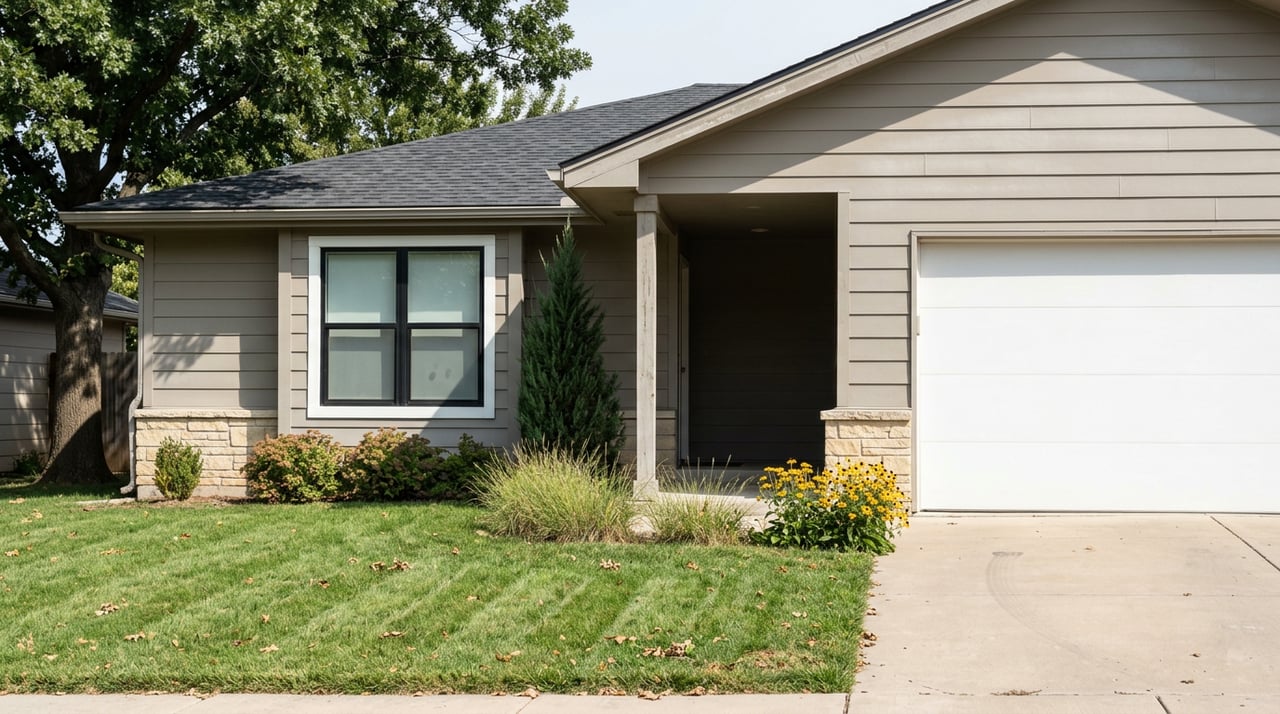
Picture two new-construction listings, ten minutes apart, same square footage, same finish level, same $550,000 price tag. One of them will cost you more every single year for the next several decades. The other won't. Nothing on the yard sign tells you which is which.
That gap has a name: the metro district mill levy. And whether you pay it or not often has less to do with the builder, the floor plan, or even the county, and more to do with a single city council vote that happened in Longmont in the summer of 2020.
The line item buyers need to check
A metropolitan district, or metro district, is a financing tool developers use to build roads, water lines, and parks before enough rooftops exist to pay for them through ordinary tax revenue. The district issues bonds, the bonds fund the infrastructure, and homeowners repay that debt over time through an added mill levy on their property tax bill. It is a legitimate, common financing structure in Colorado, and it has become the default one. As of November 2023, the state had 2,337 metro districts, and roughly 87 percent of new homes sold across the Colorado Front Range that year sat inside one, according to housing data firm Zonda cited by industry group figures. A related figure from the same reporting put 90 percent of the state's master-planned communities inside a district boundary. The rule of thumb Colorado real estate circles use is blunt: if your home is under 20 years old, there is a good chance it sits inside a metro district.
Buyers should confirm when the metro district levy is expected to appear on the tax bill for the specific property.
What Longmont's council actually decided in 2020
Longmont has a short, specific answer to how much of this risk its buyers carry, and the answer traces back to one vote.
According to the Longmont Leader, the city had restricted residential-only special districts through a 2012 ordinance that capped residential square footage in mixed-use districts at 50 percent. In February 2019, the council reversed that restriction and allowed unlimited residential-only special districts. One project, Mountain Brook, moved through that open window: its residents approved forming the district on May 5, 2020, and the Boulder County District Court issued the order organizing it later that month, recording it on June 4, 2020.
As the Longmont Leader reported, in August 2020 the council reversed course again. In a divided 5 to 2 vote, it rescinded the 2019 ordinance and reinstated the older 2012 restriction, effectively closing the door on new residential-only metro districts going forward. The ordinance stated that "buyers of homes in district projects are often unaware of the higher property taxes in their development and may become upset when property taxes increase."
The same report described how the debate on the council floor split along familiar lines. Councilwoman Marcia Martin, who voted against the reversal, argued the concern was overblown and pointed to Mountain Brook itself as proof the tool could be used responsibly, saying "there are people who want to mischaracterize the Mountain Brook development as luxury housing but it is not." She added that "most of the development includes housing in the attainable range." Councilman Aren Rodriguez, who moved to rescind the 2019 ordinance, called the fight over special districts a wedge issue that was unlikely to resolve with one vote.
The practical result of that vote is what matters for anyone shopping new construction today. Based on public council records and the district's own filings, no new residential-only metro district has been created inside Longmont city limits since that August 2020 decision. Mountain Brook remains the exception, not the pattern.
Mountain Brook: the one that got through
If you're touring new construction in southwest Longmont near the corner of Hover Street and Rogers Road, you're looking at the one Longmont neighborhood where this math is different. The community sits on 64 acres and includes townhomes from Dream Finders Homes, single-family plans from the same builder, and condos from Landmark Homes, developed under the name Mountain Brook Partners LLC.
The district's most recent public filings put its total mill levy at 50 mills for 2023 tax collection, a figure recorded in the state's Special District Association transparency notices. That levy funds repayment on two series of bonds issued in 2021: $2,905,000 at 4.5 percent interest, maturing in December 2041, and $8,740,000 at 4.75 percent, maturing in December 2051. Worth flagging for anyone watching the district closely this year: those bonds become eligible for early redemption starting December 1, 2026, though nothing obligates the district to call them ahead of schedule. On top of the mill levy, the district's board also approved a separate operations and maintenance fee in March 2023, with collection beginning that July.
None of that makes Mountain Brook a bad place to buy. It means a buyer comparing it against a similarly priced new build elsewhere in Longmont is not comparing like to like on carrying cost, and a buyer comparing it against new construction in a neighboring town with a metro district of its own needs to ask the same question there too.
Same price, different tax future
| Where you're buying | District mill levy? | When it typically shows up |
|---|---|---|
| Most new construction elsewhere in Longmont | No new residential-only districts since 2020; verify whether the property is in a district | Not applicable |
| Mountain Brook, Longmont | Yes, per the district's service plan | Already reflected in current tax bills |
| Many new subdivisions in neighboring Front Range towns with active metro districts | Often yes | Confirm timing for the specific property |
What to check before you write an offer
Colorado law now gives buyers a specific tool for this. For any residential property inside a metropolitan district organized on or after January 1, 2000, sellers on transactions closing since January 1, 2024 are required to hand buyers the district's official website under C.R.S. 32-1-104.5, and, as [Mile High Title Guy’s Colorado disclosure guide](https://www.milehightitleguy.com/post/metro-district-disclosure-in-colorado-what-denver-agents-owe-buyers-in-2026) explains, districts operating since August 2013 also record a public disclosure document with the county clerk and recorder. Mountain Brook, formed in 2020, falls squarely under that requirement.
Before you get to the offer stage on any new-construction listing, it's worth running down a short list:
- Ask the listing agent directly whether the subdivision sits inside a metro district, and if so, request the service plan.
- Search the subdivision by name in the Special District Association of Colorado's public database, which lists mill levies, board members, and meeting records for every district in the state.
- If you're looking at a resale inside Mountain Brook specifically, ask your title company to confirm the district's current mill levy and any outstanding operations fees before closing.
- Don't assume a lower list price in a district-heavy town nets out cheaper than a higher list price in a town without one. Run the annual carrying cost, not just the sticker price.
What today's numbers actually tell you
Overall, Longmont's market has cooled slightly this year without falling apart. Zillow's Home Value Index put the average Longmont home value at $557,628 as of its June 30, 2026 update, down 2.2 percent year over year, with homes going to pending status in around 18 days. Over the three months ending May 2026, the median sale price sat at $555,000, down 2.0 percent from the same period a year earlier, while the median price per square foot climbed to $290, up 8.4 percent year over year. Homes were averaging 41 days on market over that same window.
Read together, those numbers tell a specific story. Overall values easing while price per square foot climbs means the mix of what's selling has shifted, not that space itself has gotten cheaper. In a market where every dollar of price per square foot is being watched that closely, an invisible annual mill levy is not a rounding error. It's exactly the kind of number that should be on the table before an offer goes in, not after the first tax bill arrives.
Quick answers for cross-shopping buyers
Does buying resale in Mountain Brook mean I'm locked into the mill levy indefinitely? The district's bonds carry maturity dates of 2041 and 2051, though they become eligible for early redemption starting December 1, 2026. The service plan sets limits on the levy, but a buyer should confirm the current rate at the time of purchase rather than relying on older figures.
Is a metro district automatically a bad sign? Not necessarily. It's a financing structure, and some local officials have argued it can lower upfront development costs and support more attainable housing, as Councilwoman Martin did in defending Mountain Brook. The issue isn't the tool, it's whether a buyer knows about it before closing.
How do I find out if a specific subdivision has one? Start with the listing agent, then verify independently through the Special District Association of Colorado's public records and your title commitment, which will list any recorded special district disclosures tied to the property.
If you're comparing new construction across Longmont and its neighboring towns and want someone to run the real numbers with you before you write an offer, not after, Jane Kraemer is a phone call away. Schedule Your Free Market Consultation and let's look at what a listing actually costs, not just what it lists for.
This article is general information, not legal, tax or financial advice. Consult a qualified professional about your situation.