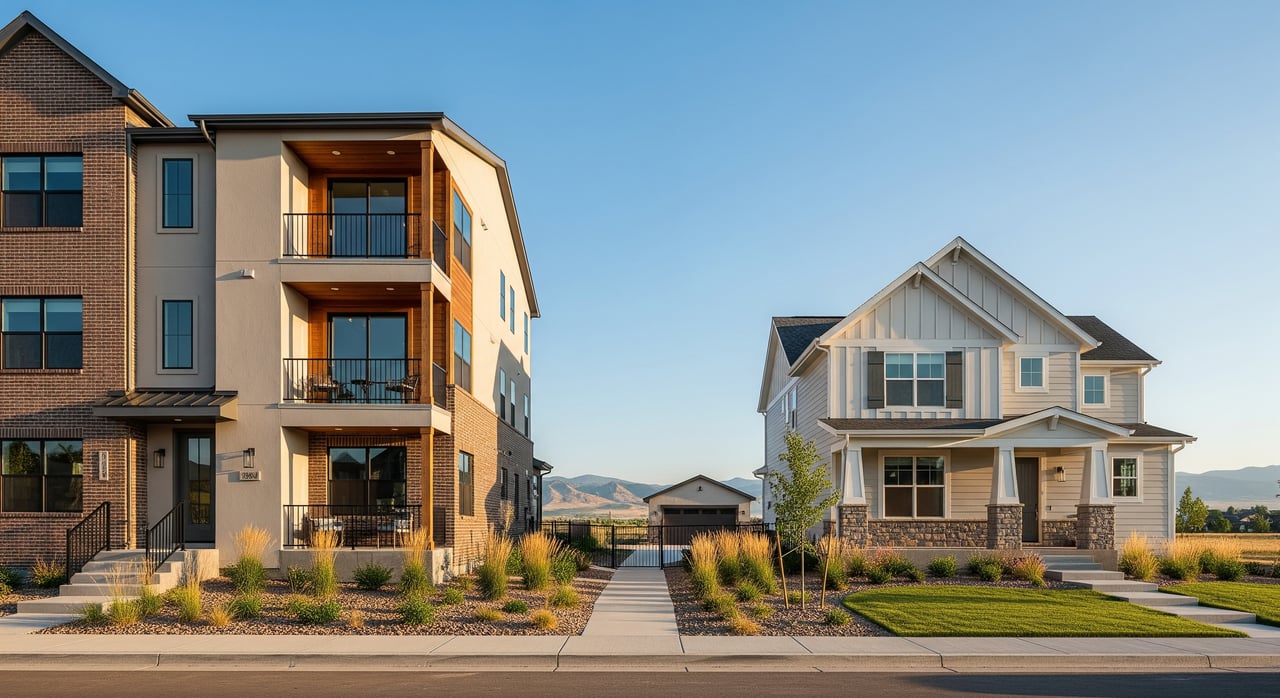
Are you trying to decide between a townhome and a single-family home in Frederick? It is easy to focus on the purchase price, but your true monthly cost comes from several moving pieces. You want a clear, apples-to-apples view so you can choose the right home for your budget and lifestyle. This guide walks you through the key cost differences, local considerations, and a simple process to compare both options with confidence. Let’s dive in.
What to compare first
Purchase price and market fit
Purchase price drives your loan amount, monthly payment, and equity over time. In many markets, single-family homes often list higher than comparable townhomes, especially when they include a private lot and larger square footage. New construction can also price differently than resale, and both property types are available in Frederick. Compare the most recent 6 to 12 months of sales for each type to see how they stack up right now.
Property taxes and assessments
Property taxes are based on assessed value for the land and structure. Single-family homes usually sit on larger, individually owned lots, which can mean higher assessed values than attached townhomes with similar interior space. In Frederick, some neighborhoods also fall under metropolitan or special districts that add mill levies. Always pull actual tax bills for the homes you are considering, and check for district assessments that affect annual costs.
Insurance coverage and premiums
Single-family policies typically cover the entire structure, other structures, and liability. Townhome owners often carry an HO-6 policy that covers the interior, while a master association policy may insure the exterior and common areas. Master policy types vary. The details can change your premium by hundreds of dollars per year. Confirm coverage in the HOA documents and match your personal policy to fill any gaps.
HOA dues and what they include
Townhomes commonly have monthly dues that fund exterior upkeep, roofing, landscaping, snow removal, trash, and reserves. Single-family homes in planned communities may also have dues, though they are often lower and focus on common area maintenance. The value of HOA dues depends on what they cover and the association’s financial health. Review budgets, reserve studies, and recent meeting minutes to understand any risk of special assessments.
Maintenance, repairs, and replacements
With a single-family home, you usually handle the roof, siding, exterior paint, driveway, fence, and yard. A common planning rule is to set aside 1 to 2 percent of the home’s value each year for maintenance, though actual needs vary by age and condition. In townhomes, much of the exterior may be covered by the HOA, which can lower your personal maintenance spending. You will likely still handle systems such as HVAC, appliances, and interior repairs.
Utilities and monthly operations
Utilities can differ by property type and by neighborhood. Townhomes often have smaller yards and sometimes include trash or snow removal in dues, which can shift costs away from your utility line items. Water, sewer, electric, and gas are typically billed individually, but metering and inclusions vary by community. Ask for recent utility statements or usage history to compare.
Financing and closing costs
Both property types qualify for common loan programs. For attached housing, lenders may review HOA financials and insurance arrangements. Some loan programs have extra requirements for attached communities. Closing costs are broadly similar, though townhome purchases often include small HOA document and transfer fees. Your lender can clarify each line item for your specific purchase.
Resale value and liquidity
Buyer demand patterns matter for your exit strategy. Single-family homes often attract a broad pool due to private lots and flexible use of space, which can support resale strength. Townhomes appeal to buyers who prioritize lower maintenance or price efficiency. The quality of the HOA and amenities can influence time on market and the sale-to-list ratio. Look at days on market and sale trends by property type in Frederick to set expectations.
Frederick-specific watchouts
Metro districts and mill levies
Many newer Front Range neighborhoods use metropolitan districts that levy taxes for infrastructure and amenities. These charges show up on the property tax bill and can vary by subdivision. Compare total annual tax amounts for each home you are considering, not just the advertised rate.
HOA coverage varies widely
In Frederick, some townhome associations cover roofing, siding, exterior insurance, snow removal, and landscaping. Others may be more limited. Read the Declaration and insurance summary to confirm what is covered and what falls to you. A reserve study can help you gauge the risk of special assessments.
New construction vs resale
Frederick includes both new-build and resale options for townhomes and single-family homes. Newer homes may have lower near-term maintenance, though some new communities have higher dues or metro district taxes. Builder warranties can reduce risk during the first years, but review what is covered and for how long.
Weather and insurance considerations
Front Range weather can bring wind, hail, and winter storms. These hazards influence both master policy costs and individual homeowner premiums. Coverage choices and deductibles affect your out-of-pocket exposure after a storm. Review the master policy deductible and any owner responsibility for claim shortfalls.
Commute and lifestyle tradeoffs
Proximity to I-25 and the region’s job centers makes Frederick attractive to commuters. If you want a private yard for pets, gardening, or gear storage, a single-family home may be worth a higher all-in cost. If you prefer lower exterior maintenance and potentially lower entry price, a townhome may fit better. Match the choice to your daily routine and long-term plans.
Step-by-step cost comparison
Use this simple process to build a side-by-side view for a specific townhome and a specific single-family home you are considering.
- Pin down purchase basics
- Final contract price for each property.
- Down payment, interest rate, and loan type from your lender.
- Estimated principal and interest payment for each.
- Pull real property taxes
- Obtain the most recent tax bill for each parcel.
- Divide annual taxes by 12 for the monthly figure.
- Note any special district assessments included in the bill.
- Confirm insurance needs
- For the townhome, get the association’s insurance summary and determine master policy type.
- Price the correct personal policy for each home, then divide the annual premium by 12.
- Review HOA dues and fees
- Record monthly dues and note what is included.
- Ask about recent or upcoming special assessments and the association’s reserves.
- Estimate utilities and services
- Request recent utility statements or usage history for each property.
- Note any services included in dues, like trash or snow removal.
- Plan for maintenance and replacements
- For single-family, budget an annual maintenance reserve that fits the home’s age and condition.
- For townhome, reduce the interior-only estimate to reflect HOA exterior coverage.
- Total it up
- Monthly total for each: principal and interest, taxes, insurance, HOA dues, utilities, maintenance.
- Annual total for each, then compare the difference.
- Five-year view (optional but helpful)
- Add up 60 months of expected payments and costs.
- Subtract principal paid down and your appreciation scenarios to see net cost to own.
- Run sensitivity checks for interest rate changes, HOA increases, or a one-time special assessment.
When a townhome makes sense
- You want lower exterior maintenance and predictable upkeep.
- You value a smaller footprint with efficient space and possible lower entry price.
- You prefer included services such as snow removal or landscaping, when offered by the HOA.
- You plan to own for a shorter window and want to minimize large exterior projects.
When a single-family home fits
- You want a private lot for outdoor living, pets, or a garden.
- You prefer control over exterior choices and timing of projects.
- You want flexible storage and layout options for gear and hobbies.
- You plan to hold long term and value potential resale demand for homes with yards.
How Jane helps you compare
Buying in Frederick is not just about the sticker price. It is about the complete cost, the lifestyle fit, and your long-term plan. As a local, boutique advisor backed by a national brand, Jane combines neighborhood expertise with a hands-on process that keeps you informed and in control. She will help you gather the right documents, read HOA and insurance details in plain language, and negotiate with confidence so you can choose the home that truly fits your goals.
Ready to compare real homes and numbers side by side? Reach out for a friendly, no-pressure conversation. Schedule your Free Market Consultation with Jane Kraemer.
FAQs
What costs differ most between townhomes and single-family homes in Frederick?
- The biggest differences usually show up in HOA dues and coverage, property taxes tied to assessed value, insurance type and premiums, and how much exterior maintenance you personally fund.
How do HOA dues affect my monthly budget for a Frederick townhome?
- Dues can shift costs from your maintenance line into a shared budget that covers exterior care and reserves, so check what is included and whether the association has a healthy reserve balance.
Do townhomes always have lower property taxes than single-family homes?
- Not always; taxes depend on the assessed value and any district mill levies, so compare actual tax bills for each specific property rather than assuming by property type.
What insurance policy do I need for a Frederick townhome?
- Most owners carry an HO-6 policy for interior coverage, which must align with the HOA’s master policy type, so confirm whether the master is bare-walls, walls-in, or full replacement.
Are closing costs different for townhomes vs single-family homes?
- Core closing costs are similar, though attached homes often add HOA-related document and transfer fees, which are usually modest compared to the overall transaction.
Which option tends to resell faster in Frederick?
- Resale speed varies by price point, neighborhood, and market cycle, so review recent days on market and sale-to-list ratios by property type in the areas you are targeting.